
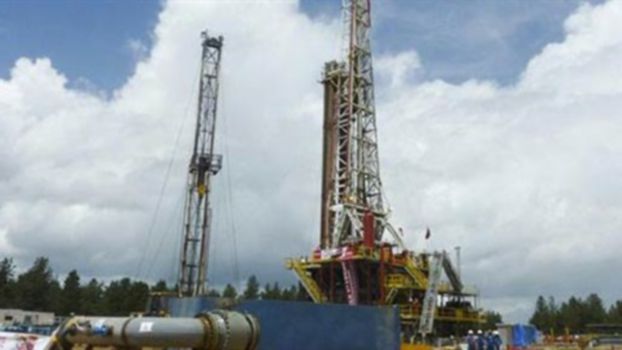
Iran’s energy projects market offers regional and international companies opportunities worth up to $167 billion as Tehran prepares for international sanctions to be lifted. According to a MEED Projects report, around 197 individual energy projects—covering oil, gas, petrochemicals, industry, and utilities—were planned or under construction in Iran, a number expected to double as sanctions were gradually removed.
The company’s report, issued yesterday, identified the $4.5 billion Kish gas field development as the largest future energy project, followed by the $3.2 billion Anahita oil refinery in western Iran. Other major projects included the $3 billion Nakhlou aluminum complex and the $2.5 billion Jask oil terminal.
The company said major capital-intensive projects were not the only opportunity. Sanctions had left energy infrastructure needing extensive development and modernization, particularly with technology previously unavailable. The MEED Projects database showed that the country had established more than 200 facilities with asset values exceeding $100 billion, alongside 250 projects built before 2000 that needed significant investment to upgrade existing manufacturing facilities.
MEED Projects content and analysis director Ed James described Iran as fertile ground for energy investment. GDP was close to $400 billion, the population nearly 80 million, and the country held the world’s third-largest gas reserves and fourth-largest oil reserves. Yet only now, with sanctions relief imminent, were international companies gaining opportunities to invest in domestic projects for the first time in a decade.
The report said Iran needed substantial investment, but the value of energy contracts awarded had fallen sharply since sanctions were imposed, apart from 2010. Awards had declined from a 2005 peak of $21.1 billion to $6.9 billion the previous year. The decision to lift sanctions was expected to bring awarded work back toward the levels of a decade earlier.
Of the $167 billion in planned or ongoing energy projects, gas was the largest segment at $88 billion, followed by oil at $47 billion and power at $10.6 billion.
Reuters quoted Iranian Oil Minister Bijan Zanganeh as saying that the country expected oil output to rise by 500,000 barrels per day immediately after sanctions were lifted and by 1 million within months.
“We have already started marketing,” he said. Sanctions had reduced Iranian crude output by 1 million barrels per day from 4 million. “We will return to 3.8 and 3.9 million barrels within the next few months,” he added. He said he had informed OPEC that sanctions would be lifted and Iran would return to previous production levels: “We will not ask anyone’s permission to restore our rights.”
IRNA quoted a senior aviation official as saying Iran planned to buy around 90 Boeing and Airbus aircraft to modernize its aging fleet once Western sanctions were lifted. Acting Civil Aviation Organization chief Mohammad Khodakarami said purchases planned over one year would form the first phase of fleet renewal.
Russian Energy Ministry data showed the country’s oil production fell to 10.65 million barrels per day in July from 10.71 million in June. Gas production reached 44.77 billion cubic meters the previous month, equivalent to 1.44 billion cubic meters per day, compared with 42.58 billion cubic meters in June.
An Algerian Energy Ministry official told Reuters that the OPEC member had increased crude output by 32,000 barrels per day after two new fields began production. Output rose the day before yesterday when Bir Seba began producing 20,000 barrels per day, with another 12,000 from Bir Msana in the Hassi Messaoud area.