
The world celebrates New Year’s Eve on Thursday amid fears and warnings of extremist attacks affecting preparations across Europe, Asia, Australia, and the Americas. An international report published on Wednesday set out celebration locations and precautionary changes.
The report said the large fireworks display in Sydney Harbour would open the celebrations on Thursday, with local authorities concerned about extremist threats.
Across Asia, the Middle East, Africa, and finally the Americas, large crowds normally gather in the streets at midnight for fireworks, concerts, and light shows marking the end of the year.
Fireworks above Sydney Opera House and Harbour Bridge are the first major display of the New Year celebrations every January 1, and the Australian city planned another large show.
Sydney Mayor Clover Moore said the display improved every year, promising another 2,400 fireworks above the bridge and varied new effects. Seven tons of fireworks would be used.
Hong Kong, Beijing, Singapore, and other major Asian cities would try to stage comparable displays. The evening would be much quieter in Brunei, the small sultanate on Borneo, which banned Christmas celebrations under its interpretation of Islamic law. Jakarta’s security alert would remain very high after authorities foiled a planned New Year’s Eve suicide attack.
European celebrations would be most affected by terrorist threats. Brussels canceled events, while security forces in several countries were placed on maximum alert, including Turkey, where a suicide attack plot had been prevented.
“We must not take risks,” Brussels Mayor Yvan Mayeur said when announcing the cancellation of downtown fireworks after fresh arrests in Belgium.
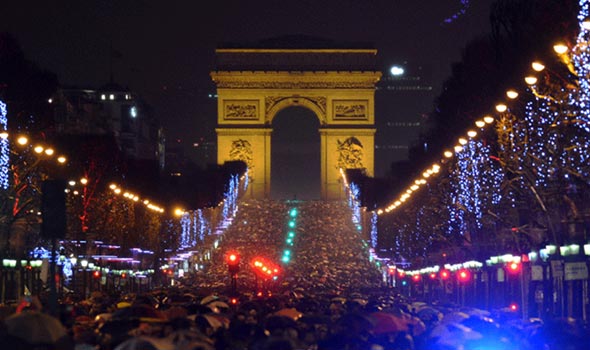
Paris, still tense after the November 13 attacks, would also have no fireworks. Traditional celebrations on the Champs-Élysées remained scheduled but would be modest and heavily secured.
Mayor Anne Hidalgo told Le Journal du Dimanche that the city could not sit idle after what it had experienced and needed to send a message that Paris remained resilient.
For the first time, Moscow would close Red Square, the symbolic gathering place for New Year celebrations, also because of fears of attacks.
Madrid police would limit entry to Puerta del Sol, “Gate of the Sun,” to 25,000 people. Attendance at fireworks beside the Thames would require paid tickets.
Cairo, working hard to bring tourists back, would stage major celebrations in front of the pyramids with many performers.
In nearby Gaza, Hamas banned public New Year celebrations, saying they conflicted with religious values and traditions.
Freetown, capital of Sierra Leone, one of the West African countries hardest hit by Ebola, sought to reclaim its place among the region’s best celebration destinations. Twelve months earlier, the virus had left the city deserted. Resident Franklin Smith, 35, said: “This year I will dance and celebrate until dawn.”
Finally, one million people were expected in New York’s Times Square under tight security.